THE METHOD
Communication Is Air
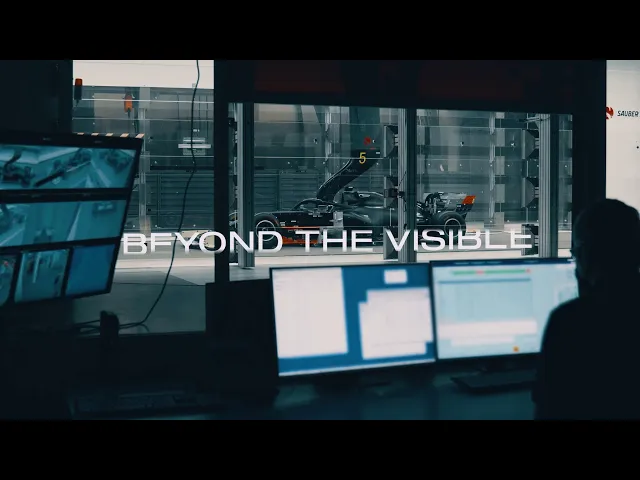
Beyond the Visible
In Formula 1, everything depends on air.
The car cuts through it. The wings shape it. The floor controls what the driver can't see. Air decides grip. Air decides speed. Air decides whether a team goes forward or falls behind. When communication flows clearly, teams accelerate. When it is disturbed or unclear, the entire system loses stability. More effort. More drag. More waste.
Communication performance turns that invisible force into something you can shape. It gives structure to behaviour. It reduces friction between teams. It strengthens decision-making under pressure.
Formula 1 teams spend months perfecting airflow with millimetre precision, because small improvements create compounded gains. Creative studios grow through the same principle: improve the flow, clarify the signals, and build a system where people know how to move.
The race is never only about the car.
Around every Grand Prix there is an entire world in motion. The pit crew executing a two-second tyre change that took months to rehearse. The team principal reading the race from thirty metres above the track. The engineers back at the factory processing data in real time. The families and friends in hospitality, watching with a different kind of attention. The fans in the grandstands and the hundreds of millions at home, for whom the team is a story as much as a sport. The media constructing the narrative before the chequered flag. The sponsors whose identity travels at 340 kilometres per hour. The young engineers and drivers watching to understand what's possible. The collaborators across supply chains and technical partnerships. The stakeholders whose confidence determines what the team can build next season.
A Formula 1 team does not communicate with one audience. It communicates with all of them simultaneously, through the same performance, all weekend, every race.
The car is the product. The race is the content. The result is the reputation. And the communication — across every touchpoint, every relationship, every signal sent and received — is what determines whether the whole system compounds or contracts.
Creative studios work exactly the same way.
The founder is the driver. The brand, the offer, the processes, and the team are the car. The market is the track, different conditions every season, different competitors, different demands. And around all of it is an audience far larger than most founders acknowledge: existing clients who become advocates or go quiet, potential clients forming impressions before they ever reach out, collaborators deciding whether this is a studio worth associating with, media and press covering the work or overlooking it, new talent choosing where to build their careers, communities watching what the studio stands for, partners and stakeholders reading signals in every decision.
All of them are watching the race. All of them are forming conclusions. And most studios are not managing any of that communication with anything close to the precision a Formula 1 team brings to a qualifying lap.
Performance begins before the work reaches the world.
It begins in the invisible layer that holds everything together. Communication is the air your organisation runs on. When you manage it with intention, everything becomes faster, cleaner, and more resilient.
In Formula 1, the difference between first and fifth is never dramatic. A tenth of a second in sector one. A tyre change three laps sooner. An instruction from the pit wall that changes the line through turn seven. Marginal improvements, accumulated across a race distance, that compound into a result which looks inevitable on the podium and was never inevitable at all.
Creative studios work the same way. The studio that dominates its category arrived there through a hundred small improvements made consistently over time. A sharper way of explaining the work to someone encountering it for the first time. A more deliberate presence in the spaces where the next client, the next collaborator, the next talent is paying attention. Better communication with the client in week two of a project. A clearer signal to every part of the audience that is always, already, watching.
The Communication Performance Dashboard™ is the pit wall.
Ten phases. One-hundred instruments. A complete telemetry system for how your studio communicates, across its market, its clients, its team, and the full orbit of people watching, deciding, and forming conclusions about what you do and whether it matters.
Every session is a lap debrief. Every action item is a setup change. Every audit topic is a part of the system that can be tuned, improved, and tested again.
You drive. We track performance and adjust in real time.
The goal is not a perfect race. The goal is to be faster next lap than you were this one.
If this is how you want to work — get in touch.